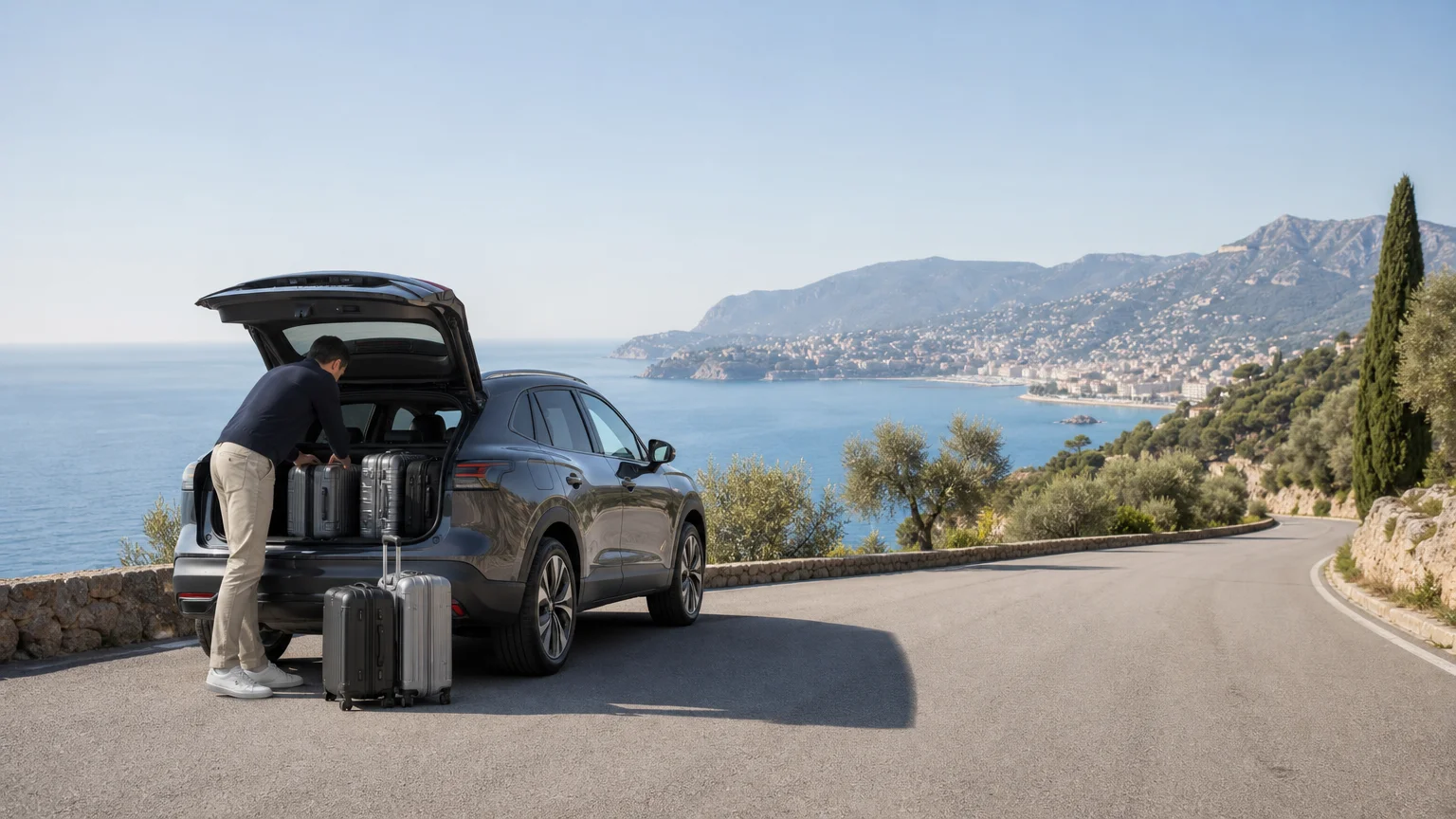

A cruise connection leaves little room for uncertainty, especially when you are carrying luggage or traveling with children. If you need a dependable port transfer in Nice, our Nice transfers guide helps you understand the routes, timing, and booking details before you arrive.
Nice-area cruise transportation usually involves either Port Lympia in Nice or the bay of Villefranche-sur-Mer. The right choice depends on your ship’s location, whether you are arriving from Nice Côte d’Azur Airport or a hotel, how much luggage you have, and how much time remains before embarkation or the latest return-to-board time.
Which Nice port should your transfer serve?
Start by confirming the exact port shown in your cruise documents. Port Lympia is Nice’s historic harbor, close to the Old Town and the eastern side of the city. Villefranche-sur-Mer is a separate cruise arrival point in a deep bay east of Nice, and passengers may need to follow the cruise line’s instructions for shore access and tender operations.
- Port Lympia: Suitable for ships using Nice’s main harbor and for journeys between the port, Nice hotels, Nice-Ville station, and Nice Côte d’Azur Airport.
- Villefranche-sur-Mer: Suitable for cruise calls using the bay and for transfers to Nice, Monaco, Èze, the airport, or other French Riviera destinations.
- Airport connection: Give the driver your flight number when relevant, then confirm the cruise port and vessel details separately.
Public transport can be cheaper, but it may involve walking, changes, and managing suitcases across several stages. For example, the current Rome2Rio route information lists several ways to travel between Villefranche-sur-Mer and Nice Airport, including a bus and tram combination of roughly 56 minutes and faster private road options of about 20 minutes. These are route estimates, so traffic, luggage, and the time needed to reach the correct terminal still matter.
Why book a private transfer instead of arranging transport on arrival?
Arranging a ride after disembarkation may work for a flexible visit, but it is less comfortable when several passengers are leaving at the same time. A pre-booked private port transfer gives the chauffeur your destination, vessel information, passenger count, luggage details, and requested pickup time before the day begins.
Our direct booking process is designed for this kind of coordination. You can provide the journey addresses, date, time, number of passengers, luggage information, and any child-seat requirements through the reservation flow, or contact us directly when a schedule needs clarification. There is no intermediary booking platform between the customer and the chauffeur, which keeps questions and changes in one conversation.
For travelers continuing from the port to a hotel or another Riviera destination, our Nice France car service guide explains how a private chauffeur journey can connect the port with Nice, Monaco, Cannes, Antibes, Menton, Èze, Beaulieu, or other destinations covered by the reservation flow.
What should families confirm before booking?
Families should request the correct child restraint during booking rather than assuming one will be available at the port. Under the service’s stated French regulatory guidance, children under age 10 must use an appropriate child-restraint system. Without suitable equipment, finding a chauffeur willing to accept the journey at short notice can be difficult because the driver carries safety and legal responsibilities.
On our booking flow, child seats are provided free of charge when requested in advance, subject to the available options and booking conditions. The listed R44/04 choices include:
- A rear-facing Group 0+ infant carrier for children weighing 0 to 13 kg.
- A Group 0+/1 baby seat for children weighing 9 to 18 kg, with the stated weight range depending on the restraint position.
- Two booster seats for children from 15 kg, generally around 4 to 10 years old.
The vehicle and booking capacity still apply, so provide the children’s ages and weights, as well as the number of seats required. This is especially important when a family has a rear-facing infant seat, a forward-facing child seat, and a booster seat to arrange at the same time.
How much luggage can the vehicle carry?
Luggage capacity should be checked before paying for a transfer, particularly if you are carrying cruise cases, cabin bags, strollers, or medical equipment. The booking page permits a maximum of four passengers and up to two hold suitcases plus two cabin suitcases, subject to luggage dimensions and the space actually available.
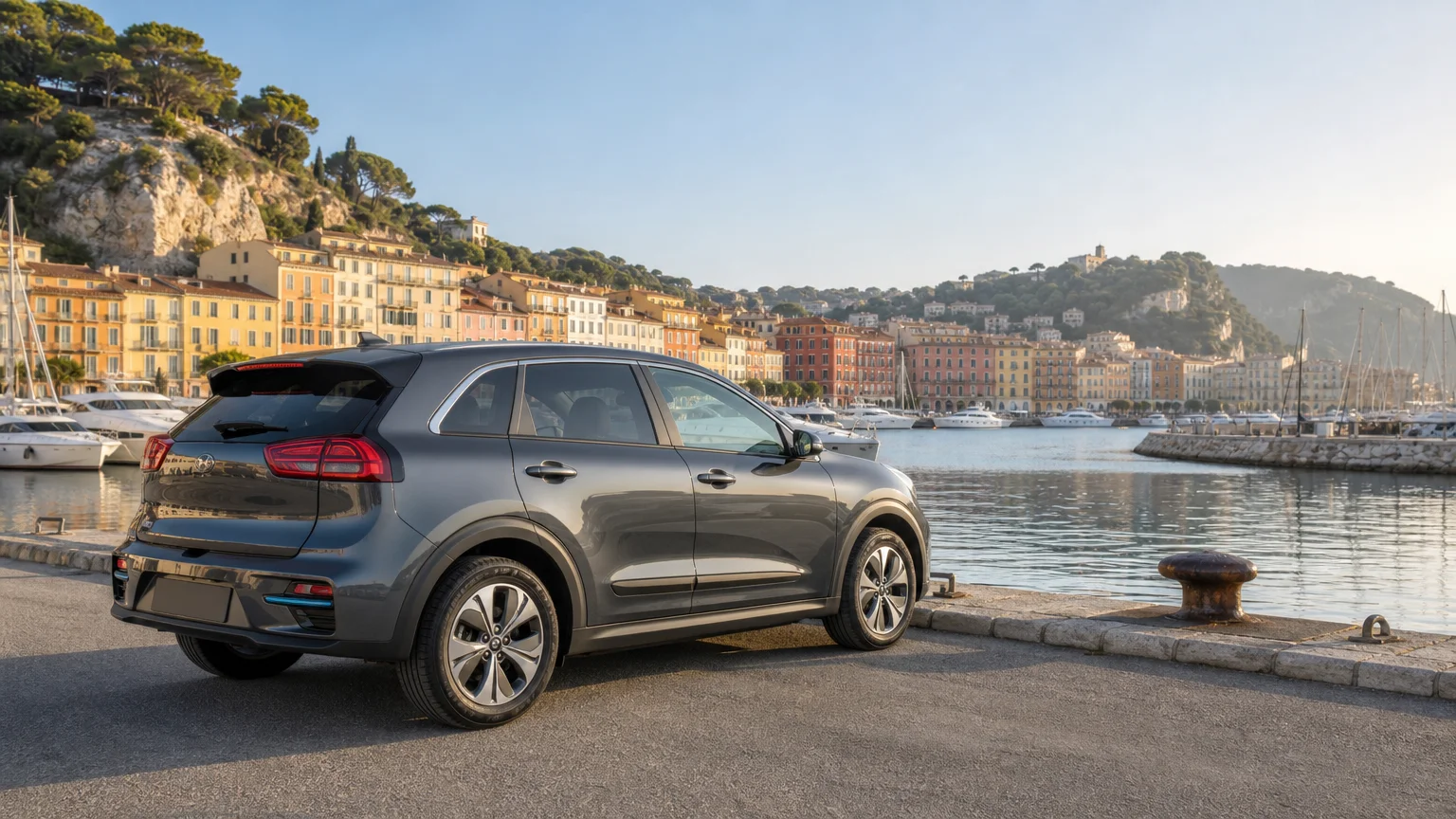
The airport-transfer vehicle is described as a grey electric Kia e-Niro, and its trunk can accommodate a maximum of two large checked suitcases and two cabin suitcases under those conditions. If your party has more luggage than this, enter the full details in the reservation form before booking rather than relying on a last-minute arrangement.
The same information helps when booking a return from the ship. Cruise disembarkation can involve several bags per passenger, and a clear luggage description gives the chauffeur a more accurate basis for confirming whether the vehicle is suitable.
How much time should you allow for a Nice port transfer?
Work backward from the least flexible deadline, which is usually the vessel’s latest return-to-board time or a flight departure. For a cruise return, plan to arrive at the ship at least 90 minutes before the vessel’s stated latest return-to-board time. This is planning guidance, not a guarantee against traffic, tender delays, road closures, or changes made by the cruise operator.
When traveling from Nice Côte d’Azur Airport, allow approximately 45 minutes after landing for disembarkation, baggage collection, and customs before meeting the chauffeur. Add more time during major Riviera events, including the Cannes Festival, the Monaco Grand Prix, and the Yacht Show, when traffic can substantially increase journey times.
A 2026 marketplace page for Nice port transfers gives an example of approximately 35 minutes for one private airport to Villefranche-sur-Mer journey, as shown in this 2026 port-transfer listing. That figure is only an example, because the actual duration depends on the pickup point, traffic, ship schedule, and terminal access.
What pricing conditions should you check?
For a 2026 booking, confirm whether the quotation is for a one-way or return journey, the travel time, the destination, the passenger count, and the luggage details. The reservation flow calculates the applicable amount and identifies additional conditions before confirmation.
- Return journeys: A return booked with the outbound journey is priced at twice the one-way fare, less 10 percent.
- City waiting: A five-minute allowance is included at the scheduled appointment. Further waiting costs €12 for each started 15-minute period.
- Airport waiting: Airport pricing includes 60 minutes, consisting of 30 minutes from the scheduled landing time and an additional 30 minutes offered by the chauffeur.
- Flight delays: When a flight arrives more than 60 minutes after its scheduled landing time, waiting is charged at €12 for each started 15-minute period.
- Night journeys: Transfers between 22:00 and 07:00 carry a 10 percent surcharge.
- Sundays and French public holidays: These journeys carry a 10 percent surcharge.
These details are important because the lowest visible fare is not always the final amount for a late-night, Sunday, holiday, or delayed airport journey. A separate private-transfer listing on Tripadvisor also asks travelers to provide the luggage count, cruise vessel, and terminal details, and recommends requesting a port pickup at least three hours before the flight departure time. The listed transfer details are provider-specific, but they illustrate why cruise and flight information should be entered accurately.
What makes the vehicle and driver relevant to the journey?
A port transfer is more than a short road journey when the route passes along the French Riviera. A driver with good local knowledge can share anecdotes and historical context about Nice, Monaco, Villefranche-sur-Mer, and Menton when passengers request it, while also suggesting practical places to visit between transport connections.
The grey electric Kia e-Niro used for the airport-transfer service offers a quieter way to travel through a particularly enchanting but fragile coastal environment. Compared with large combustion-engine cars, an electric vehicle avoids tailpipe exhaust during the journey. It does not remove every environmental impact associated with transport, but it is a sensible choice for a short regional transfer where the vehicle’s capacity matches the group.
Comfort also depends on realistic loading. The maximum is four passengers, two large checked suitcases, and two cabin suitcases, subject to dimensions and available space. If that configuration fits your party, the vehicle can combine direct port coordination, luggage assistance, and a lower-impact driving option without adding unnecessary vehicle size.
How do you book a port transfer in Nice?
- Identify the port: Confirm whether your cruise uses Port Lympia in Nice or Villefranche-sur-Mer.
- Enter the journey: Add the exact pickup and drop-off addresses, date, time, passenger count, and luggage details.
- Add family requirements: Request a rear-facing seat, child seat, or booster seat and provide each child’s age and weight.
- Review the conditions: Check the one-way or return fare, waiting allowance, possible surcharges, and recommended buffer before confirming.
- Keep direct contact: Save the chauffeur’s contact details in case your ship, flight, or arrival schedule changes.
For airport arrivals, supplying the flight number allows official airport schedules to be monitored. After landing, the chauffeur contacts the passenger, waits at the arrivals exit with a sign bearing the passenger’s name, assists with luggage, and escorts the group to the vehicle.
Plan the port connection around your deadline
A successful Nice port transfer begins with accurate details, not with the shortest estimated journey time. Confirm the correct port, allow a generous buffer for cruise and airport procedures, request child restraints in advance, and check that the passenger and luggage limits match your group. With those points settled, the journey from Nice Airport, a station, or a Riviera hotel to Port Lympia or Villefranche-sur-Mer becomes much easier to manage.
Book Your Nice Port Transfer to Villefranche
When your cruise schedule, luggage, or family requirements leave little room for uncertainty, direct coordination can make the transfer easier to organize. Reserve the route in advance and provide the details needed for a clear pickup plan.
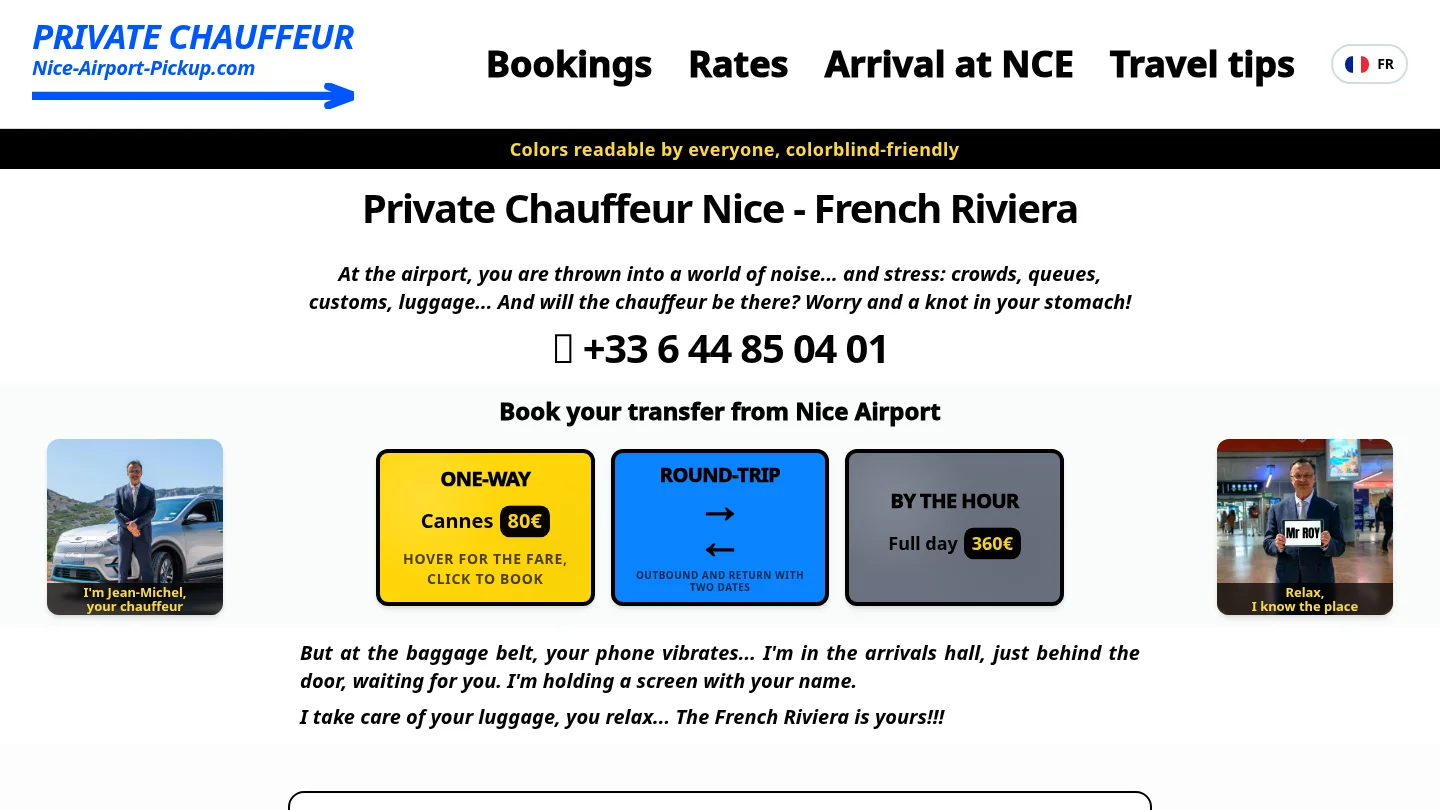
Our Nice port transfer to Villefranche service connects the airport, Nice, and the bay of Villefranche-sur-Mer with a private chauffeur, luggage assistance, flight monitoring when a flight number is supplied, and free child seats or boosters when requested during booking.
Frequently Asked Questions
What is the main difference between Port Lympia and Villefranche-sur-Mer?
Port Lympia is Nice’s main harbor, while Villefranche-sur-Mer is a separate port area east of Nice in the bay. Your cruise documents should identify which location applies to your ship.
Can I request a rear-facing baby seat for a port transfer?
Yes, a rear-facing Group 0+ infant carrier can be requested during booking for a child weighing 0 to 13 kg. Child seats are provided free of charge when requested in advance, subject to the booking options and vehicle capacity.
How many passengers and suitcases can the vehicle carry?
The booking capacity is a maximum of four passengers, with up to two large checked suitcases and two cabin suitcases. Luggage dimensions and the actual available space still need to be considered.
How early should I return to my cruise ship?
Plan to arrive at least 90 minutes before the vessel’s latest return-to-board time. Add more time when major Riviera events, tender delays, or heavy traffic could affect the route.
Can the chauffeur provide information about the French Riviera?
Yes, when requested, the chauffeur can share anecdotes and historical information about Nice, Monaco, Villefranche-sur-Mer, and Menton. Local suggestions may also be provided during the journey.