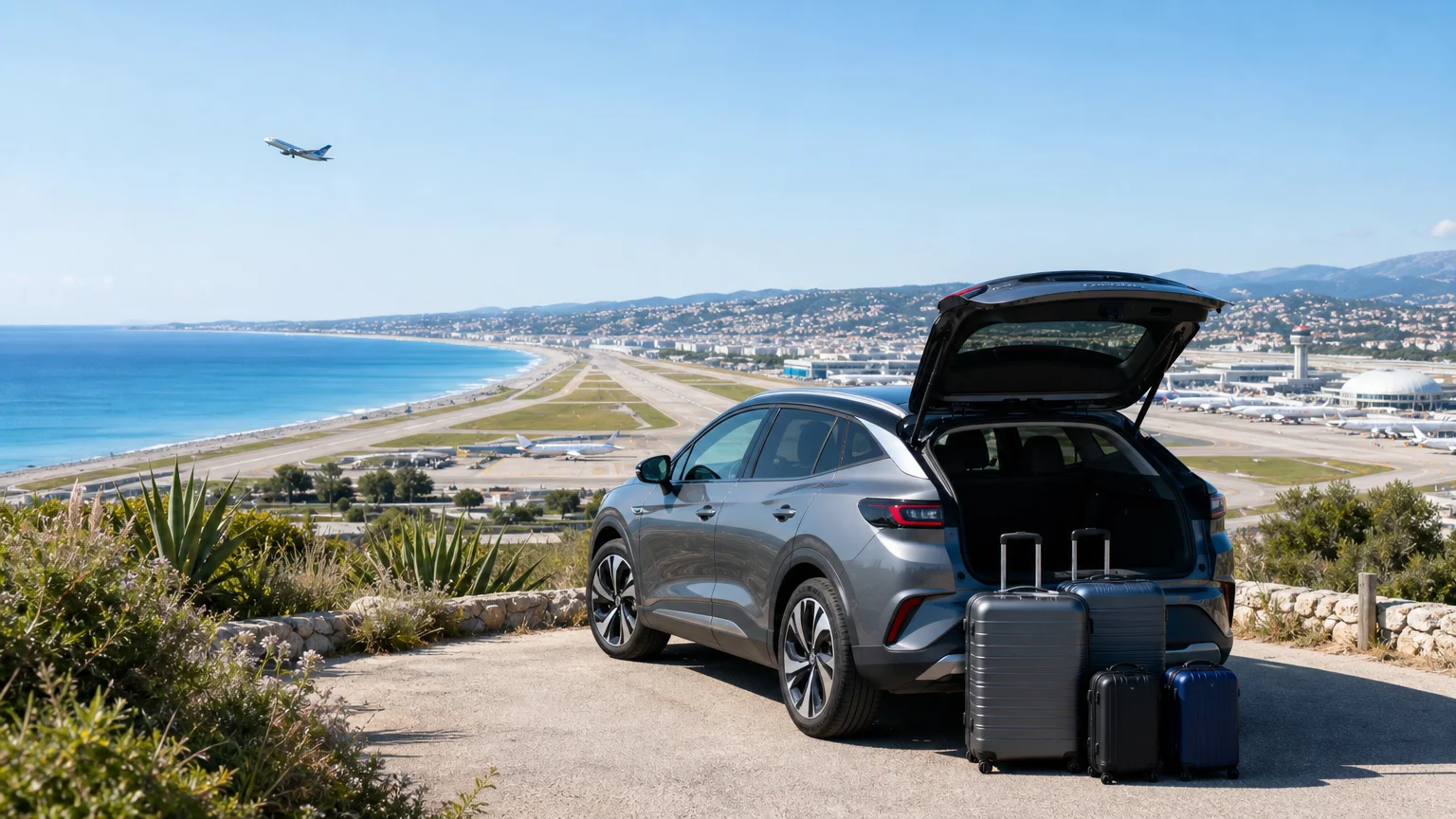

Arriving at Nice Côte d'Azur Airport should feel like the beginning of your Riviera stay, not another logistical challenge. If you prefer a planned journey after landing, our transportation from Nice Airport helps you compare the main ways to reach Nice, Monaco, Cannes, Antibes, Menton, and nearby coastal destinations.
The airport handled 15.23 million commercial passengers in 2025, a 3.2% increase from 2024, according to the airport’s official traffic update. That scale explains why terminal awareness, realistic transfer times, and a clear meeting plan matter when you arrive during the busy 2026 travel season.
Why Nice Côte d'Azur Airport matters in 2026
Located west of central Nice, the airport serves the city, the Côte d’Azur, and the Principality of Monaco. Its coastal position makes it an important arrival point for visitors staying in Nice, Villefranche-sur-Mer, Èze, Monaco, Menton, Antibes, Cannes, and Saint-Tropez.
The latest available monthly series from France’s national statistics institute records 1,014,700 passengers at the airport in March 2026. You can consult the INSEE passenger series for the published monthly figures and their historical context.
Traffic is not distributed evenly throughout the year. Summer months, major events, school holidays, and weekends can increase demand for airport transport and extend road journey times along the Promenade des Anglais or the A8 motorway. A journey that looks short on a map may therefore require additional time during peak periods.
The airport also functions as a practical entry point for Monaco. The principality is close to Nice by road, while rail and bus connections provide alternatives for passengers travelling with lighter luggage. A private vehicle can be more convenient when you are travelling with several suitcases, children, mobility constraints, or a destination away from a main station.
How the 2 passenger terminals are organised
Terminal 1 and Terminal 2 handle passenger flights at Nice Airport. Your airline and booking confirmation should indicate the correct terminal, but you should still check the airport’s flight information before leaving for the airport because operational arrangements can change.
Terminal 1 handles domestic, Schengen, and non-Schengen services. It includes check-in areas, departure gates, food outlets, shops, passenger assistance, and access to ground transport. Terminal 2 is larger and handles a broad range of domestic, European, and international services.
In 2026, the expanded Terminal 2 is an important part of the airport’s passenger infrastructure. The project added new boarding and arrival areas, check-in capacity, and baggage-processing facilities. The operator states that the extension increases theoretical annual capacity to 18 million passengers, supporting the airport’s growth while reducing pressure on existing passenger routes.
The two terminals are connected by a free airport tram service. This is useful when you need to move between terminals, meet another passenger, or correct an initial terminal mistake. Allow extra time if you must collect luggage, change terminals, or travel with several bags.
Facilities across the terminals include restaurants, cafés, shops, currency services, ATMs, family facilities, charging points, and passenger lounges. Availability can differ according to the terminal and whether you are in the public or restricted area. For a smooth departure, check your terminal, airline, and boarding zone before entering the building.
Which transport options connect the airport with Nice?
Several transport modes serve Nice Côte d’Azur Airport, and the appropriate choice depends on your destination, luggage, arrival time, and tolerance for changes.
- Tram line 2: This connects both airport terminals with central Nice, Jean Médecin, and Port Lympia. The journey to the city centre generally takes less than 30 minutes, although the exact time depends on your final stop.
- Local buses: Bus services connect the airport with central Nice and nearby districts. They can be useful for addresses that are not close to a tram stop.
- Regional buses: Services connect the airport with destinations such as Cannes, Antibes, Monaco, Menton, and other locations across the Alpes-Maritimes.
- Train connections: Nice Saint-Augustin station is near the airport and connects with regional rail services along the coast. You may need to walk or use the tram before boarding your train.
- Taxis and private transfers: These provide direct travel to your accommodation or a specific address without changing vehicles.
- Car rental: Rental vehicles provide flexibility for inland villages and longer regional itineraries, although traffic, parking, and motorway tolls should be included in your planning.
Public transport can be economical, especially when you are travelling alone with limited luggage. A direct car is often more practical when your destination is outside central Nice or when you arrive after a long flight and want to avoid several connections. Our guide to Nice Airport taxis explains the practical points to consider before choosing a road transfer.
For journeys to Monaco, Cannes, or Menton, compare the entire route rather than only the first leg. A tram followed by a train may be simple for one traveller with a small bag. It can become less convenient when you must carry large suitcases through stations or coordinate several arrival times.
What should you expect after landing?

After landing, you must usually allow time for disembarkation, passport checks where applicable, and baggage collection. The airport may be straightforward to navigate, but arrival procedures vary by airline, origin, terminal, and time of day.
If you have booked a private pickup, agree on the meeting process before departure. A clear plan should identify the terminal, arrivals exit, passenger name, contact method, and procedure for delays. This removes uncertainty when several flights arrive close together.
Nice Airport Pickup arranges airport journeys around the flight number supplied during booking. We can monitor the official schedule, coordinate the meeting process, and assist with luggage after you reach the arrivals exit. The service is designed for travellers who prefer direct communication rather than searching for transport after landing.
The vehicle transfer itself may be short for central Nice, but the full arrival experience includes finding the driver, loading luggage, leaving the airport access roads, and reaching your accommodation. If you are travelling with two checked suitcases and two cabin cases, confirm vehicle and luggage suitability before booking. A compact electric crossover can accommodate that arrangement when the luggage is packed to fit the available trunk space.
How should you choose between public transport and a private car?
Consider the complete itinerary rather than judging each option by price alone. Public transport can work well for central accommodation near a tram or rail station. It may be less convenient for hillside addresses, villas, ports, or villages where the last connection requires a walk or taxi.
A private car offers a direct route, assistance with luggage, and a more predictable handover between the airport and your destination. It can also simplify travel for families, groups, older passengers, or travellers who are tired after a long flight.
Our stress-free airport arrival in Nice guide covers practical preparation, including flight details, meeting arrangements, baggage collection, and communication if your schedule changes.
For a return journey, consider booking both directions together when your plans are firm. A round trip can make the airport departure easier because the pickup time, destination, and communication process are arranged in advance. An hourly chauffeur service may be more suitable if you plan several stops, a coastal visit, or a flexible itinerary.
Road transfers also make regional context more accessible. A knowledgeable chauffeur may share anecdotes about Nice, Monaco, Villefranche-sur-Mer, Menton, and other Riviera locations during the journey. This does not replace a guided tour, but it can add useful orientation and help you understand the landscape between destinations.
Can an electric vehicle suit a Riviera transfer?
For airport and coastal journeys, an electric vehicle can provide a quiet and comfortable alternative to a larger combustion vehicle. It produces no tailpipe emissions during the journey, which can be relevant in a region where busy roads, dense urban areas, and a fragile coastal environment meet.
This does not make every journey impact-free. Battery production, electricity generation, vehicle manufacturing, and road traffic all contribute to a wider environmental footprint. Still, choosing a compact electric vehicle for a suitable transfer can avoid some local exhaust emissions and reduce unnecessary engine noise near urban and seaside areas.
The French Riviera’s scenery deserves thoughtful travel choices. A grey compact electric crossover can blend practical passenger transport with a more restrained presence on the road, especially when it replaces a larger vehicle carrying the same number of passengers and bags.
Before booking, ask about luggage capacity, passenger numbers, child seats, accessibility, and the total route. These details matter more than the vehicle category alone. They help ensure that a lower impact choice remains comfortable and appropriate for your actual itinerary.
What should you check before travelling?
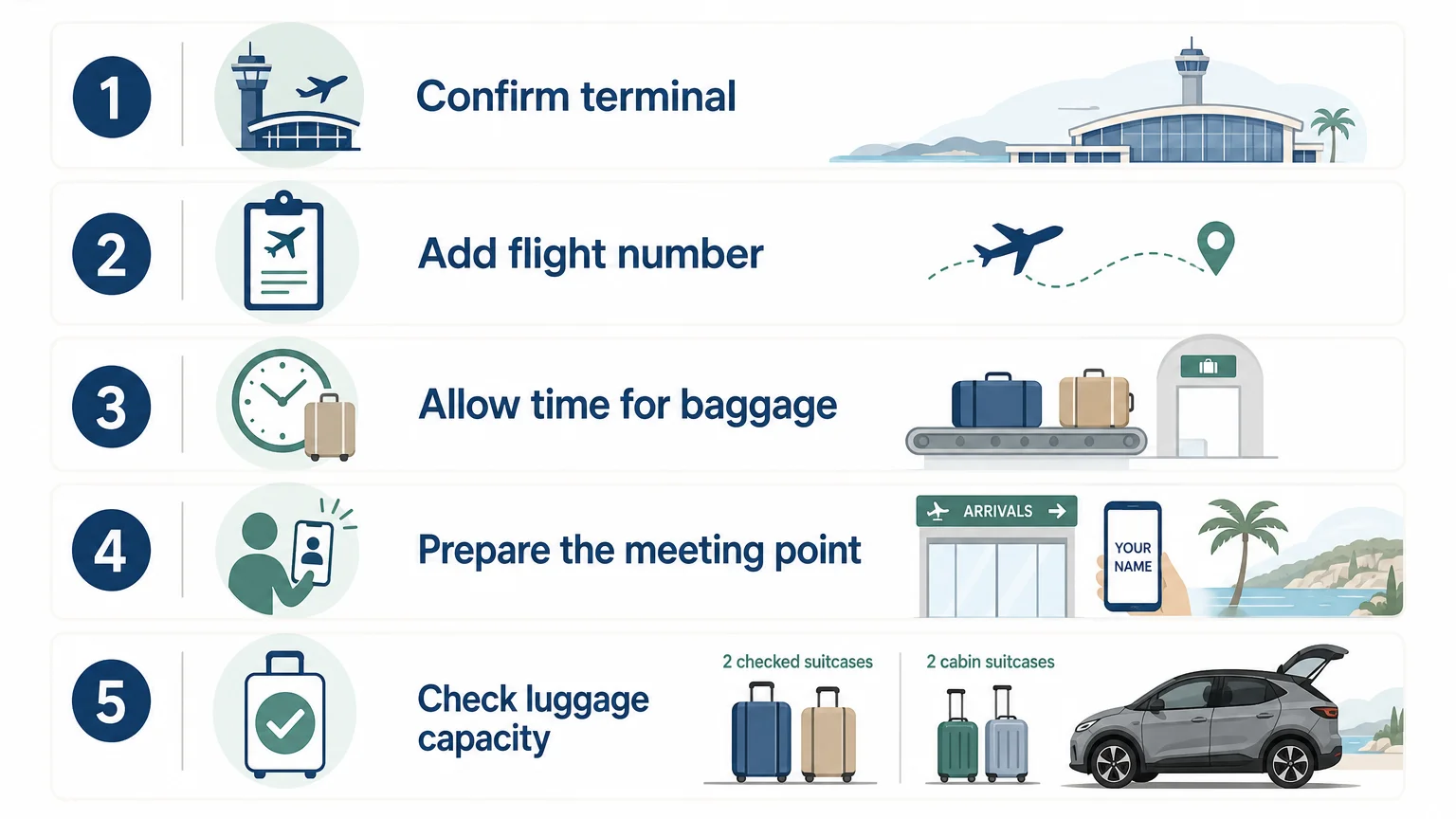
- Confirm the terminal: Check your airline booking and the airport’s flight information before setting out.
- Share your flight number: This helps a pre-booked driver follow schedule changes and plan the meeting time.
- Allow arrival time: Leave enough time for disembarkation, passport formalities, and baggage collection.
- Prepare the meeting point: Agree on the arrivals exit, passenger identification, and a contact method before landing.
- Review luggage needs: Confirm that the vehicle can accommodate your suitcases, cabin bags, companions, and any special equipment.
For departure, allow extra time for traffic on the coast, airport access roads, check-in, security, and walking to the gate. The airport’s high passenger volumes make an early and realistic schedule more useful than relying on an optimistic journey estimate.
Operational planning matters because airport activity involves many connected participants. A 2024 Eurocontrol study recorded approximately 149,000 aircraft movements and 14.8 million passengers at Nice Airport. These figures illustrate why coordinated ground transport can be valuable during busy travel periods.
Keep your passport, booking confirmation, accommodation address, driver contact details, and flight information accessible. If your plans change, contact the relevant transport provider as soon as possible rather than waiting until you reach the arrivals hall.
Planning a smoother arrival at Nice Airport
Nice Côte d'Azur Airport combines 2 passenger terminals, strong regional connections, and access to the main destinations of the French Riviera. Tram, bus, train, taxi, rental car, and private transfer services can all be appropriate, depending on your destination, luggage, arrival time, and preferred level of direct assistance.
The most reliable approach is to confirm your terminal, allow time for baggage collection, and choose transport based on the complete journey. For coastal travel, a suitable electric vehicle can also support a quieter and more considered arrival in a particularly sensitive environment.
Take action with Nice Airport Pickup
Once you know your terminal and destination, the next step is arranging a clear arrival plan. We help travellers organise direct journeys from Nice Côte d’Azur Airport to Nice and destinations across the French Riviera, with options for one-way, round-trip, or hourly chauffeur service.
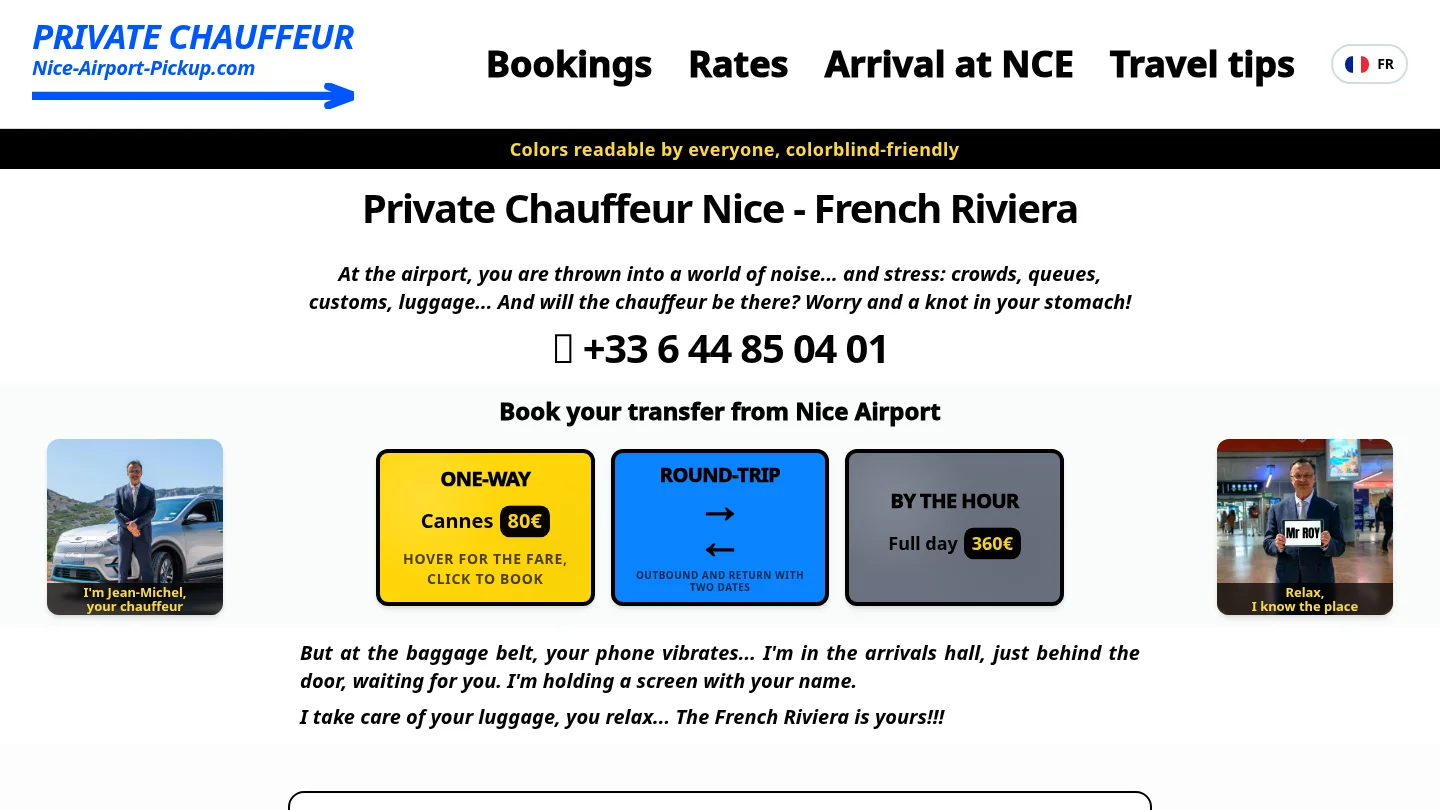
Our Nice Airport transfer service can be arranged around your flight number, with an arrivals-hall meeting, direct communication, and luggage assistance. We can also help coordinate journeys to stations, ports, Monaco, Cannes, Antibes, Menton, and other regional destinations. If you value a planned handover and local knowledge after landing, book your journey before departure.
Frequently Asked Questions
How far is Nice Côte d’Azur Airport from central Nice?
The airport is located west of central Nice, near the western end of the Promenade des Anglais. The journey time depends on traffic, your exact address, and whether you travel by tram, bus, taxi, or private car.
How many passenger terminals does Nice Airport have?
Nice Airport has 2 main passenger terminals, Terminal 1 and Terminal 2. A free airport tram connects them, making it easier to change terminals or meet another traveller.
Can I travel directly from the airport to Monaco?
Yes. You can use regional buses, trains with an interchange, taxis, or a private transfer. A direct car may be more convenient when you have several bags or accommodation away from a main station.
How early should I arrive for a flight from Nice?
Your airline’s advice should be the primary reference because requirements vary by destination and passenger type. Allow additional time during summer, weekends, public holidays, and periods of heavy road traffic.
Can Nice Airport Pickup arrange a private airport pickup?
Yes. Nice Airport Pickup can arrange one-way, round-trip, and hourly chauffeur services, with flight-number coordination, an arrivals-hall meeting, direct communication, and luggage assistance.