

Would you prefer to know the transport cost before leaving, or pay according to the exact distance and time of your journey? For airport arrivals and planned Riviera travel, our Nice airport taxi fares guide explains why a confirmed price can make the journey easier to organise, particularly when luggage, traffic, and flight schedules are involved.
The main difference is simple: a flat fare is agreed before departure, while a meter-based ride calculates the charge during the journey. However, local rules matter. In France, taxi pricing is regulated, and official guidance explains how taximeters combine distance, travel time, minimum charges, and permitted supplements. French taxi fare regulations can therefore differ from pricing used by private chauffeurs or booking platforms.
Which option is better for your trip?
Flat fares are usually better when you value an upfront price, expect congestion, or are travelling to a known destination such as an airport, station, port, or resort. Meter-based rides can be more economical for short local journeys when traffic is light and the route is unlikely to change.
| Criterion | Flat fares | Meter-based rides |
|---|---|---|
| Price certainty | Price is generally agreed before departure | Final cost is calculated during the ride |
| Traffic impact | Usually protected from ordinary delays | Slow traffic and waiting can increase the fare |
| Route suitability | Best for known destinations and planned journeys | Useful when the route or destination may change |
| Short trips | May include a minimum or booking charge | Can be economical when distance and time are limited |
| Long trips | Provides stronger budget control | Can vary with congestion, detours, and waiting |
| Checking the charge | Compare the agreed amount with the booking details | Review the meter, receipt, route, and applicable supplements |
Flat fares

Best for: Airport transfers, long-distance journeys, peak traffic, families with luggage, and travellers who want a clear budget before departure.
A flat fare is a fixed amount agreed for a defined journey. It is usually based on the destination, route, vehicle category, travel conditions expected at booking, and any clearly stated extras. Once the journey meets the agreed conditions, normal traffic delays do not usually change the price.
This model is particularly useful after a flight. You may be tired, carrying several bags, and unfamiliar with local roads. A confirmed total removes the need to watch a meter while leaving the airport. It also makes it easier to compare transport options before you book. For broader planning, our guide to airport transfer costs and options outlines the main differences between pre-booked services and other airport transport choices.
Flat pricing is not automatically the cheapest option. A provider may build expected traffic, vehicle operating costs, airport access, tolls, or reservation arrangements into the quoted amount. You should therefore confirm whether the price includes tolls, waiting conditions, additional stops, extra passengers, or changes to the destination.
Pros:
- Strong price certainty before departure.
- Better protection against ordinary traffic delays.
- Simple budgeting for airport and long-distance journeys.
- Convenient for families and groups carrying luggage.
- Easier comparison between providers before booking.
Cons:
- The fixed amount may be higher than a short metered journey in light traffic.
- Route changes or additional stops may require a revised price.
- Some extras may sit outside the headline fare.
Meter-based rides
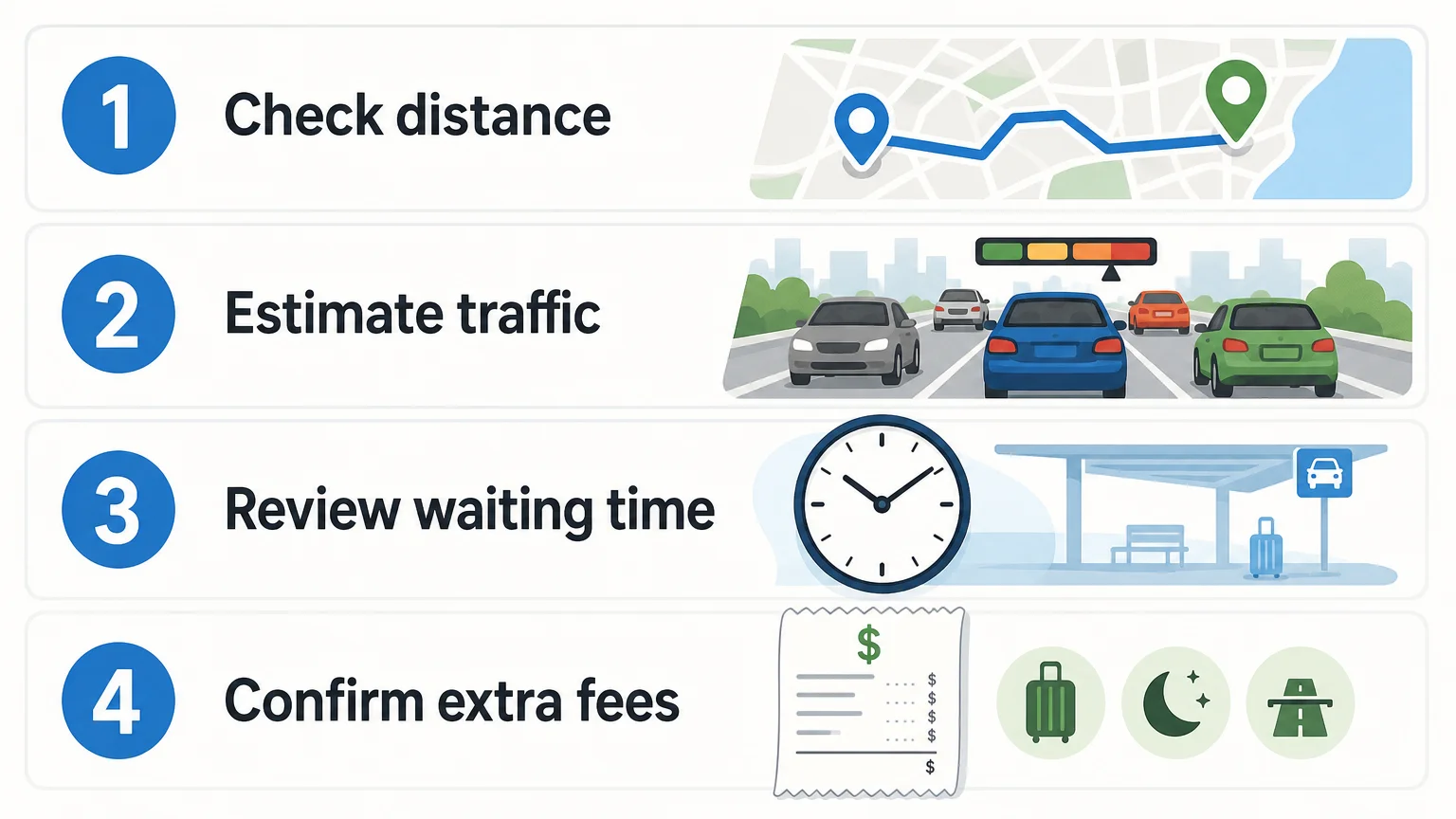
Best for: Short local journeys, flexible routes, light traffic, and situations where you want to pay according to actual distance and travel time.
A meter-based ride calculates the fare during the journey. The calculation commonly combines a starting charge, distance travelled, and time spent moving slowly or waiting. Depending on the jurisdiction, the fare may also include booking charges, airport fees, luggage supplements, night rates, tolls, or other regulated additions.
The advantage is flexibility. If you need to change the destination, make a permitted stop, or take a route that differs from the initial plan, a meter can reflect the additional distance and time. For a short journey with clear roads, this may produce a lower final cost than a pre-arranged flat fare.
The main drawback is traffic exposure. When the vehicle moves slowly or stops, the time component can continue to increase. This matters near airports, during demonstrations, at major events, or on congested coastal roads. In France, the official taxi guidance describes a calculation based on both distance and time, with regulated supplements depending on the journey and location.
For a local journey around Cannes, checking the expected route and possible traffic is especially important. Our guide to taxi fares in Cannes provides useful context when comparing a traditional taxi journey with a pre-booked private transfer.
Pros:
- You pay according to the measured distance and time.
- It can be economical for short trips in light traffic.
- It accommodates some route changes more naturally.
- The meter and receipt can provide a clear record of the calculation.
Cons:
- Congestion and waiting can increase the total.
- The final price may be unknown until arrival.
- Local supplements can make comparisons difficult.
- A detour or extended stop may raise the fare.
How traffic, waiting, and route changes affect the result
Consider two journeys covering the same distance. The first takes place early in the morning on clear roads. The second takes place during a busy arrival period, with queues near the airport and slow movement through town. A meter-based fare can be noticeably different between the two journeys because time becomes part of the calculation.
A flat fare reverses that risk. The operator accepts more responsibility for estimating the route and operating conditions before departure. This can be valuable on the French Riviera, where airport roads, coastal routes, summer traffic, and narrow town streets can create unpredictable travel times.
Route certainty also matters. If your destination is fixed, such as Nice Airport to a hotel in Monaco, a flat fare is easier to assess. If you are travelling locally and may change plans, a meter may offer more flexibility. For longer Riviera journeys, our Nice to St Tropez taxi fares guide can help you consider distance, route planning, and the value of confirming the price in advance.
Local rules and extra charges can change the comparison
There is no universal rule for flat fares or meters. Each country, city, airport, taxi authority, and transport category may apply different requirements. A regulated taxi may need to use a taximeter, even when the customer has agreed a maximum or negotiated amount in advance. A private chauffeur or VTC may instead offer a freely arranged price before the journey.
Before booking, ask which costs are included. Important questions concern tolls, airport access, reservation fees, luggage, extra passengers, waiting time, child seats, additional stops, and late changes. A low advertised fare may become less attractive if several necessary charges are added later.
In France, the distinction between taxis and chauffeur services is particularly relevant. Taxi fares are regulated, while VTC prices may be fixed at booking or calculated after the journey using time and distance. The category of service therefore affects not only the price model, but also the way you can check the final charge.
Which fare model is easier to check or dispute?
A flat fare is easiest to check before departure. Keep the booking confirmation and verify the agreed destination, date, passenger count, luggage conditions, and included extras. If the final charge differs, compare it with the written terms and ask why the adjustment was made.
For a meter-based ride, request or retain the receipt. Check the starting charge, distance, time, waiting periods, surcharges, tolls, and any booking fee. If the route appears unusual, compare it with a map, but remember that a longer route may result from road restrictions, requested changes, or traffic management.
When a dispute arises, first contact the operator with the booking details and receipt. If the service is regulated, the relevant municipal or national consumer authority may provide the appropriate complaint route. Local rules determine what evidence is useful and which body has jurisdiction.
How to choose before you book
Choose a flat fare when the destination is known, the journey is long, traffic is uncertain, or you need a firm travel budget. It is also a practical option after a flight, when luggage and fatigue make a simple arrival more valuable than a potentially lower price.
Choose a meter-based ride when the journey is short, traffic is light, and the route may change. This option can work well for spontaneous city travel, particularly when you already understand the local tariff and possible supplements.
For travel around Nice and the wider Riviera, a private chauffeur can combine a pre-arranged route with direct communication. Our service is designed for one-way transfers, round trips, and hourly availability, with airport coordination, luggage assistance, and optional local information about places such as Nice, Monaco, Villefranche, and Menton.
Flat fares versus meter-based rides: the practical answer
Flat fares versus meter-based rides is ultimately a choice between certainty and flexibility. A flat fare is usually the safer budgeting option for airport journeys, long routes, heavy traffic, and travellers carrying luggage. A meter-based ride may be better for a short, simple journey when roads are clear and the local tariff is familiar. Before you decide, compare the full price, traffic exposure, included services, and local rules rather than the headline amount alone.
Take action with Nice Airport Pickup
If you are arriving at Nice Côte d’Azur Airport or travelling between destinations on the French Riviera, a pre-arranged journey can reduce uncertainty around timing, luggage, and route planning. The right choice depends on your destination and needs, but a confirmed booking gives you a clear plan before departure.
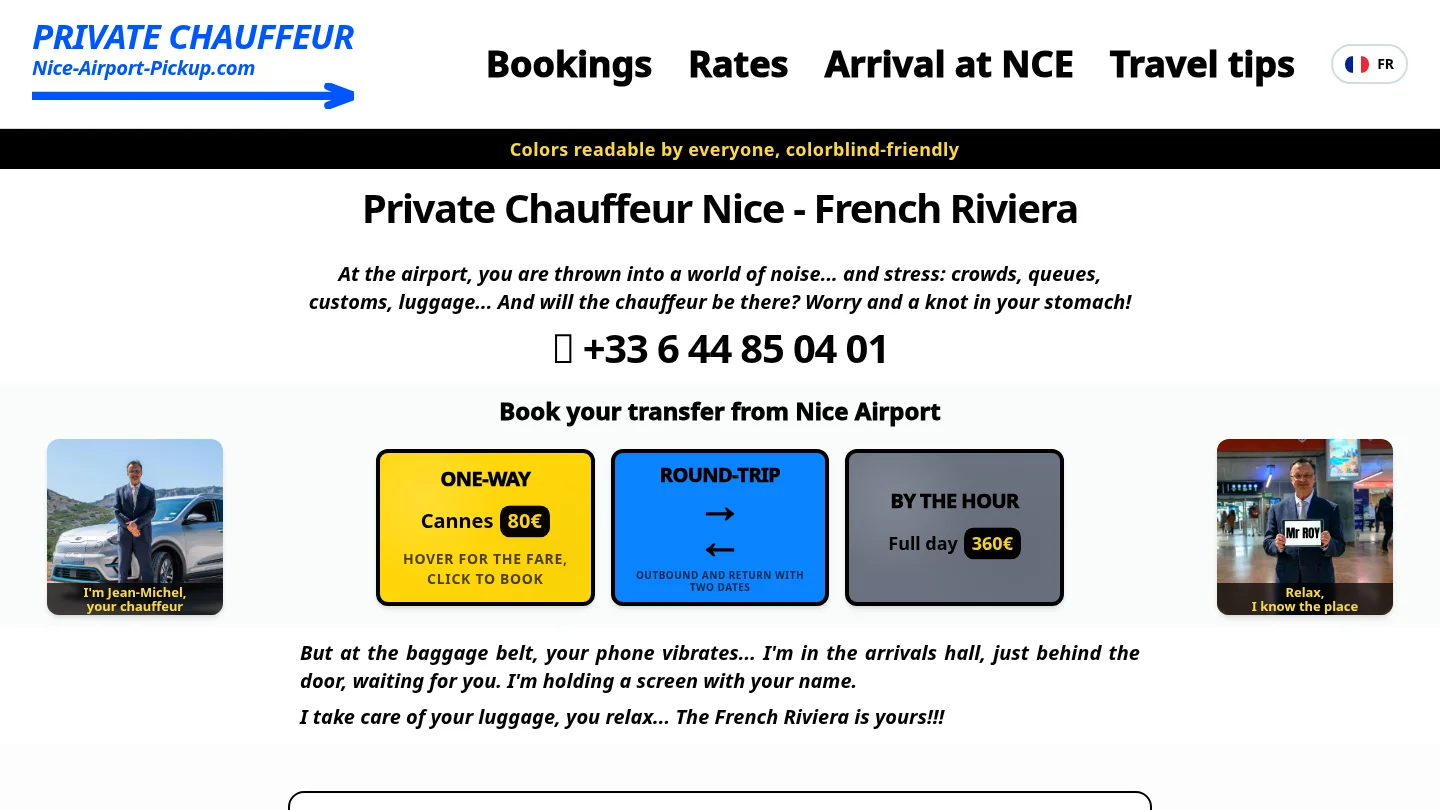
We provide private airport transfers and chauffeur journeys for one-way, round-trip, and hourly travel. You can share your flight number for schedule coordination, meet your chauffeur at the arrivals exit, receive luggage assistance, and communicate directly if your plans change. The journey can also include local historical information and sightseeing suggestions when requested.
Frequently Asked Questions
Are flat fares always cheaper than meter-based rides?
No. Flat fares are often easier to budget, but a meter-based ride may cost less for a short journey with light traffic. The best value depends on distance, travel time, local fees, and the exact conditions included in the flat price.
Can traffic increase a meter-based fare?
Yes, in many jurisdictions the meter includes both distance and time. Slow movement, stopping, or waiting can therefore increase the final charge, although the precise calculation depends on local regulations.
What should a flat fare include?
Confirm the destination, passenger count, luggage conditions, tolls, airport fees, waiting policy, and additional stops. You should also check whether the quoted amount applies to the entire vehicle or to each passenger.
Are private chauffeur prices the same as taxi meter fares?
Not necessarily. A private chauffeur or VTC may offer a price at booking, while a traditional taxi may use a regulated taximeter. The applicable model depends on the service category and the jurisdiction where the journey takes place.
Which option is better after arriving at an airport?
A flat fare is often more convenient after a flight because it provides clearer budgeting and avoids watching the meter during traffic delays. A pre-booked service may also help with meeting arrangements, luggage, and coordination if the flight schedule changes.